
Sending a parcel through Vinted means choosing between several delivery options, with two coming up most often: Vinted Go and standard drop-off at a parcel shop via Mondial Relay or Colissimo. Price is not the only factor to consider, since the buyer pays for shipping. Parcel size, compensation in the event of loss, network coverage and delivery times all influence which option makes the most sense.
Vinted Go, Mondial Relay and Colissimo: key differences at a glance
| Criteria | Vinted Go | Mondial Relay | Colissimo |
|---|---|---|---|
| Drop-off options | Automated locker or parcel shop | Parcel shop (retail store) | Post office or mailbox |
| Maximum compensation (loss/damage) | Up to €500 | €25 | €18 |
| Home delivery | Yes, via Uber Direct at some locations | No | Yes |
| Large parcels | Limited to small and medium-sized parcels | Accepts larger parcels | Various sizes depending on the service |
| Estimated extra cost vs. parcel shop | Parcel shop benchmark | Parcel shop benchmark | About €1.50 more |
The most significant difference is the compensation. Vinted Go offers compensation of up to €500, compared with a maximum of €25 for Mondial Relay and €18 for Colissimo. For an item sold for more than €30, this difference dramatically changes the level of risk the seller takes on.
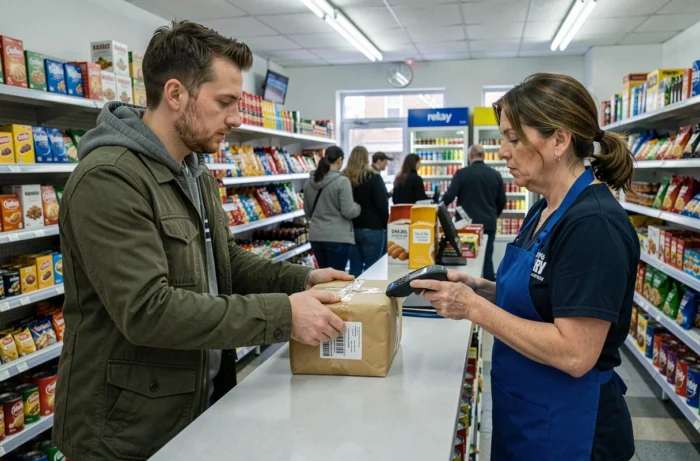
Before looking at each factor in more detail, it is worth noting that you can choose between Vinted Go and dropping off your parcel yourself, depending on the type of item and how close the available drop-off points are.
Compensation and seller protection: the overlooked factor
Most sellers compare shipping options based on delivery time or how close the drop-off point is. Compensation is the most important factor when shipping items worth more than a few dozen euros.
With €25 in compensation from Mondial Relay, a coat sold for €80 that gets lost in transit leaves the seller with a net loss of €55. Vinted Go would cover the full value of the same coat, provided its declared value is below the €500 limit.
This information is not always clearly displayed when choosing a carrier in the app. Sellers can enable or disable shipping options in their settings, but buyers choose and pay for the carrier at checkout. Sellers therefore have only one indirect way to influence the choice: disable carriers whose compensation limit is too low for their more expensive items.
Vinted Go drop-off network: availability and capacity limits
Vinted Go relies on a network of around 9,600 locations in France, including automated lockers and parcel shops in retail stores (Franprix, for example). Coverage is dense in urban areas, but actual availability depends on two factors that raw figures do not show.
The first is the physical capacity of the lockers. A full locker prevents drop-off or collection. In that case, the parcel may be redirected to another nearby location, adding extra travel for the seller or buyer.
The second is the eligibility requirement: Vinted only offers Vinted Go if a network location is available near both the seller and the buyer. If either party is in an area with poor coverage, the option disappears from the interface. This automatic filter explains why some sellers never see Vinted Go among the available options.
Mondial Relay: a wider network for larger parcels
Mondial Relay has the densest parcel-shop network in France. Its main advantage is not the number of locations, but the size of the parcels it accepts. For shipping a thick winter coat, a pair of boots or a bundle of clothes, Mondial Relay accepts sizes that Vinted Go lockers cannot physically accommodate.
However, its low compensation limit means this option is best reserved for low-value items, unless you are willing to accept the risk.
Vinted shipping times: estimates and risk of delays
Published delivery times vary by source. Vinted Go states three to six business days from drop-off to arrival at the collection point, while other guides give a range of two to five business days for shipments within France. These figures are estimates, not contractual guarantees.
One factor that is rarely considered is the time allowed for the buyer to collect the parcel. If it arrives at the parcel shop but is not collected within the allotted time, it is returned to the sender. This can be just as costly for the seller as a delivery delay, since the transaction may be cancelled.
Some user reports mention occasional delays in the Vinted Go network, particularly during busy periods. These reports relate to specific locations and periods, so they do not establish that there is a systemic problem with the network.
Colissimo: delivery feels faster thanks to home delivery
Colissimo delivers directly to the buyer’s address, eliminating the trip to a parcel shop and the risk of the parcel not being collected on time. This convenience comes at a cost: about €1.50 more than delivery to a parcel shop. For buyers in a hurry or far from a parcel shop, this remains the simplest option despite the limited compensation.
Which shipping options to enable for each type of item
The choice depends on a combination of factors: the item’s value, parcel size and location. Here are the clearest scenarios:
- Item worth more than €30 and small in size: Vinted Go offers the best coverage thanks to its compensation limit, provided a location is available near both the seller and the buyer.
- Bundle of clothes or bulky, low-value item: Mondial Relay accepts larger parcels, and the financial risk remains limited even with low compensation.
- Buyer far from any parcel shop: Colissimo home delivery avoids the problem of covering the last mile, despite the extra cost.
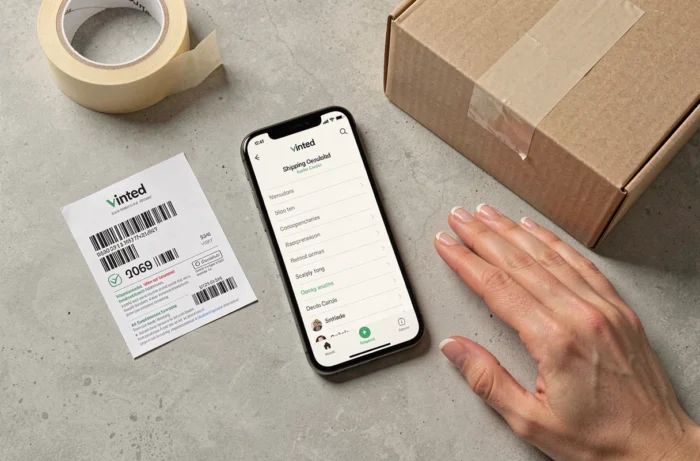
The carrier selected for a transaction cannot be changed after payment. The only way to change the shipping option is to cancel the order and place it again. Enabling several carriers in your seller settings gives the buyer a choice, but reduces the seller’s control over the level of shipping protection.
Compensation relative to the item’s value remains the deciding factor. Regular sellers shipping items worth more than €50 should consider prioritising Vinted Go and disabling options whose compensation limits do not cover their items. For low-value parcels where little is at stake financially, the choice comes down to which drop-off point is most convenient.