France’s food scene is going through a period of tangible change. Local producers are seeking new outlets with public-sector buyers, restaurateurs are grappling with evolving rules on meal vouchers, and culinary discovery is taking new forms beyond the usual restaurant experience. This autumn’s food news goes well beyond the opening of another bistro. Understanding what is happening behind the scenes can help you decide where to eat.
Local sourcing in restaurants: what producer-buyer meetings reveal
On November 9, 2026, in the Loire, a professional meeting brought together producers and public-sector buyers—including school cafeterias and care facilities—to address a specific challenge: building a structured local supply chain. Institutional kitchens are genuinely interested in fresh local produce, but feedback from the field highlights obstacles that restaurant marketing often glosses over.
The limited availability of certain local products forces buyers to juggle several suppliers. The cost of going entirely organic remains a hurdle for public budgets, prompting buyers to diversify their sources rather than rely on a single grower labeled “local.” The same applies to private restaurants that promote local sourcing: depending on the season, the promise of a 100% local menu runs up against the reality of available supply.
Among the latest news from La Cigale et la Fourchette, you’ll find this kind of question applied to everyday dining, along with coverage of restaurants that genuinely commit to short supply chains.
Pop-up restaurant and jarred menu: the “45 à table” concept in the Loiret
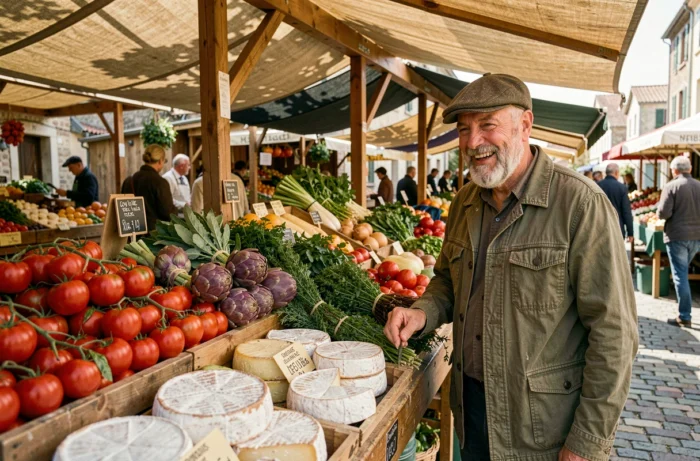
In the Loiret, the Orléans Food Fair will host a concept worth checking out from November 20 to 23, 2026. The pop-up restaurant “45 à table” offers a menu made exclusively with products from the department, served in jars, with a vegetarian option. It breaks with the usual restaurant-guide format: rather than listing places to eat, it introduces diners to local producers over a shared meal.
This format raises a useful question for consumers. A pop-up restaurant built around clearly identified products, with a menu shaped by geography and the seasons, offers a level of transparency that permanent menus don’t always provide. When the menu says “Loiret pork” or “vegetables from [a named] grower,” the provenance is immediately clear and can be verified on the spot.
Why this format is more than just a food fair
A traditional food fair puts producers behind stalls. Visitors sample, buy, and leave. A pop-up restaurant adds another step: cooking, with a chef bringing the ingredients together into a cohesive meal. Instead of tasting a product on its own, diners can see how it works as part of a complete dish. That makes a real difference for anyone hoping to recreate the experience at home or find a supplier for their own shopping.
Reporting food purchases: a requirement that changes the game for cafeterias and institutional kitchens
Institutional food-service managers must now prepare to report their 2026 food purchases for the 2027 reporting period. They will need to provide details on the quantities purchased, the quality criteria used, and the origin of the products. For consumers, this regulatory change has an indirect but tangible effect: it encourages institutional kitchens to formalize their supply chains.
A school cafeteria or nursing home that has to justify where its purchases come from can no longer make do with vague claims. Over time, the reported data will make it possible to compare practices across establishments. For local producers, this is both an opportunity—to access structured public-sector contracts—and a challenge, as they must meet precise requirements for volume and consistency.

Checking the “local and seasonal” promise: what to look for
Many restaurants now advertise “local produce,” “short supply chains,” or “seasonal” items on their menus or windows. Unlike official labels such as AOP, Label Rouge, and organic certification, these terms have no single regulatory definition for private restaurants. A few clues can help you tell a genuine commitment from a marketing claim.
- Does the menu change every few weeks, or stay the same from September to March? A menu that changes every two to three weeks reflects genuinely seasonal sourcing, with all the uncertainty that entails—items may run out or need to be substituted
- Are producers or farms named on the menu, or can staff tell you who they are if you ask? Restaurateurs who work directly with local suppliers know them by name and can talk about them without hesitation
- Is the number of dishes consistent with local sourcing? A short menu of five to eight dishes is often more compatible with a short supply chain than a menu with thirty options, which requires volumes and variety that are difficult to sustain locally
The trap of “regional specialties” menus that never change
A “regional specialties” menu that never changes is, in most cases, based on processed products or ingredients kept in storage for a long time. The seasonal vegetables available in the Landes in November are not the same as those in the Loiret, and neither resembles what you’ll find in April. A local restaurant adapts its menu to what the land produces, not the other way around.
This simple criterion makes it easy to assess whether a restaurant’s claims match what’s on the plate. The point isn’t to dismiss restaurants that supplement local ingredients with products from farther afield, but to identify those whose “local” promise covers every item on the menu without exception—a rare claim that deserves a closer look.
Meal vouchers and restaurateurs: a legislative debate is underway
Fees charged on meal vouchers are the subject of a legislative proposal that directly affects restaurateurs. The possibility of capping fees by decree is on the table, but neither the exact cap nor the implementation timeline has been decided. For small independent restaurants, these fees represent a significant cost on every transaction.
The outcome of this debate could change the economics of some neighborhood restaurants that accept meal vouchers to attract lunchtime customers. If a cap is introduced, it will reduce costs for restaurateurs. If not, some may limit their acceptance of these vouchers, changing the habits of employees who are used to eating near their workplace.
This autumn’s food news isn’t just about new restaurants or chef rankings. It also concerns the practical conditions under which restaurants source ingredients, report purchases, and handle payments. Keeping an eye on these developments can help you choose where to eat with a better understanding of what goes on behind the scenes—not just based on a photo of a dish on social media.