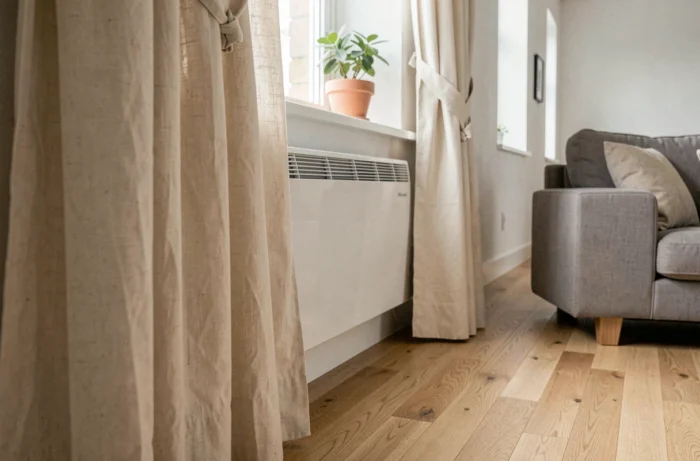
A curtain hanging in front of an electric radiator is more than an aesthetic issue. The fabric can block heat from circulating, drive up energy consumption and, in some setups, pose a genuine fire risk. Curtains and electric radiators can coexist safely when you take two practical factors into account: how the appliance distributes heat and the clearance distances specified in its manual.
Fixed radiator or portable heater: two distinct levels of risk
Before choosing a curtain, first consider the type of appliance you have. A fixed wall-mounted radiator (inertia, radiant or convector) and a portable space heater do not have the same requirements.
A fixed radiator is designed to run continuously in a designated space. Its manual specifies the required clearances above, below and in front of the appliance. These distances vary from one model to another, and no general rule can replace the manufacturer’s instructions.
Portable heaters require greater caution. The French National Consumer Institute and the Savoie fire service give clear guidance: follow the clearances specified in the manual, do not cover the appliance, do not overload outlets or power strips, and switch the heater off before leaving the room or going to sleep. The hot airflow from a portable heater can draw lightweight fabric towards the grille, while an obstruction prevents heat from dissipating properly.
Installing curtains above a fixed electric radiator is still possible, provided you follow the manufacturer’s measurements. With a portable heater, there is far less room to manoeuvre.
Convector, radiant or inertia: choose a curtain to suit the way heat is distributed
The type of electric radiator determines how heat spreads and, in turn, where fabric can hang without getting in the way.
- An electric convector draws in cold air from below and releases warm air from above. A curtain placed in front directly blocks this airflow. The fabric traps heat between itself and the window, reducing efficiency and potentially warping or discolouring the textile.
- A radiant heater emits infrared heat forwards. A curtain in the path of the radiation absorbs that energy instead of allowing it to warm the room’s surfaces and occupants.
- An inertia radiator (fluid or stone) distributes heat more gently and evenly. Its surface temperature remains moderate, allowing a little more flexibility when positioning the curtain, but the manual remains the reference for minimum clearances.
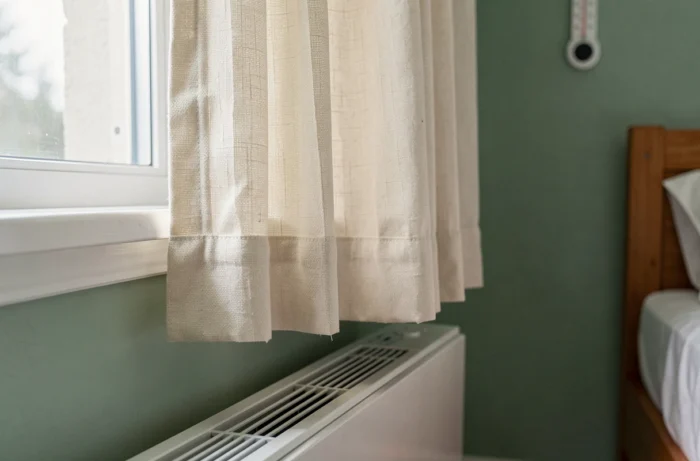
Electric baseboard heaters are a special case: their low position and compact size make them compatible with long curtains, provided the fabric does not touch the appliance.
Thermal curtains and portable heaters: resolving a space conflict
In a home with a wide window and a portable heater placed nearby on the floor, a long thermal curtain cannot cover the entire window without encroaching on the heater’s clearance area. This common situation in small apartments calls for practical compromises.
Shorten or reposition the curtain
The most straightforward solution is to install a curtain that ends at the windowsill. The fabric covers the glass (the main source of heat loss) without extending into the heater’s clearance area. A well-fitted short curtain insulates the window without interfering with the appliance.
If you still want a long curtain for privacy or aesthetic reasons, use tiebacks to hold two panels open on either side, clearing the space in front of the heater while it is running. However, you will need to remember to open the panels every time you switch it on.
Move the heater instead of the curtain
A portable heater is mobile by definition. Moving it a few dozen centimetres towards the centre of the room, or placing it against a wall without a window, resolves the conflict. Moving a portable appliance is often easier than changing the window dressing.
Alternatives to fabric curtains
When no curtain arrangement works, other window coverings can solve the problem:
- A roller blind fitted inside the window recess stays above the heating area and does not hang down in front of the appliance.
- A transparent insulating film applied to the glass reduces heat loss without taking up any space.
- Roller shutters, if available, provide better insulation than any thermal curtain.
Choosing and caring for fabric near a heat source
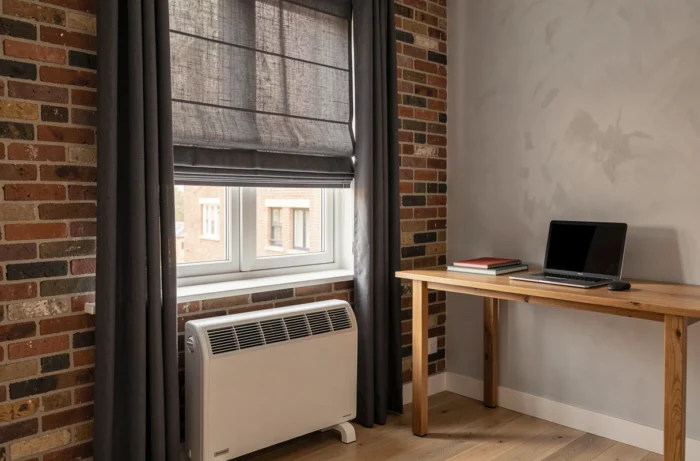
The fabric itself plays a role in safety. Fine synthetic fibres (lightweight polyester, voile) are more sensitive to heat than thick cotton or linen. A very sheer curtain can lift in the hot airflow from a convector and come into contact with the grille.
Choosing a fabric with a sufficiently high weight helps reduce this risk: the curtain hangs straight, stays in place and does not billow towards the appliance. Fire-retardant fabrics (M1 or M2 rating) are widely available and provide an extra margin of safety without changing the look.
As for care, a curtain positioned above a radiator collects more dust because of the circulating air. Regular washing or dusting helps maintain heating efficiency and prevents particles from recirculating around the room.
Keeping curtains and an electric radiator safely together comes down to one simple habit: check the appliance manual before choosing the curtain length. The manufacturer’s instructions always take precedence over a general clearance distance found online. When there is no room for a fabric curtain, a roller blind or moving the portable heater are reliable alternatives.