
A flat-pack piece of furniture that won’t fit through the bedroom door, paint that starts peeling after three months, an extractor fan that has been running pointlessly for years: there’s no shortage of reminders that furnishing and maintaining a home calls for as much technical know-how as good taste. This article brings together practical tips for decorating your home, making the most of every room and maintaining good air quality day to day.
Indoor air quality: the invisible work to tackle before decorating
Before choosing a wall colour or a sofa, it’s worth checking that your home is properly ventilated. The Observatory for Indoor Environmental Quality (OQEI) reports that, among the homes with mechanical ventilation systems (VMC) it studied, fewer than four in ten meet the required extraction airflow rate. In other words, most installed systems are not doing their job.
The issue goes beyond comfort. France’s Agency for Food, Environmental and Occupational Health & Safety (Anses) recognises proven respiratory effects linked to mould, including the onset or worsening of asthma and allergic rhinitis. When renovating or redecorating, new materials (paints, adhesives and particleboard) release volatile organic compounds for several weeks.
To keep your home healthy, try a few simple steps before and after any home improvement work:
- Clean the VMC extraction vents at least twice a year and check that the air inlets on exterior walls are not blocked by furniture or curtains.
- After installing new flooring or furniture, air the room for at least twenty minutes a day during the first few weeks, even in winter.
- Choose paints and adhesives with a low-emissions label (A+) rather than relying solely on claims that they are “odourless”.
You’ll find this kind of advice regularly in Revue Républicaine’s home section, which covers both decorating and home maintenance.

Room-by-room planning: living room, kitchen and bedroom
Every room in the home has its own constraints. Rather than running through a generic list of “golden rules”, let’s focus on common mistakes that cost time or money.
Living room: flow matters more than symmetry
People often place the sofa against the longest wall. This frees up space in the centre, but it can also leave all the furniture pushed against the walls, with an unusable empty space in the middle. In a medium-sized living room, moving the sofa a few dozen centimetres away from the wall is enough to create a proper conversation area and better define the walkway.
Lighting deserves as much attention as the main piece of furniture. A single central ceiling light creates flat, uninviting light in the evening. Combine a reading lamp beside an armchair, an indirect floor lamp behind the sofa and an accent light on a sideboard to transform the atmosphere without changing the wall decor.
Kitchen: the work triangle is still a reliable guide
The fridge, sink and hob form a triangle. The shorter and clearer the distances between them, the more comfortable it is to cook. When redesigning a kitchen, checking this triangle before finalising the layout helps avoid unnecessary trips back and forth every day.
As for storage, awkward corners (corner cupboards and the space above the fridge) are often wasted. Turntables or pull-out baskets designed for these spaces can reclaim room without changing the layout.
Bedroom: darkness and temperature matter more than wall colour
We put a lot of effort into choosing a soothing bedroom colour, but sleep comfort depends first and foremost on darkness and temperature. A poorly fitted blackout blind that lets light in around the edges defeats the purpose. Adding side channels or choosing a recessed model solves the problem for just a few extra euros.
For temperature, keeping the room at around 17 to 19 °C is the most commonly recommended range. If the bedroom radiator doesn’t have a thermostatic valve, installing one lets you control the heating in that room separately from the rest of the home.
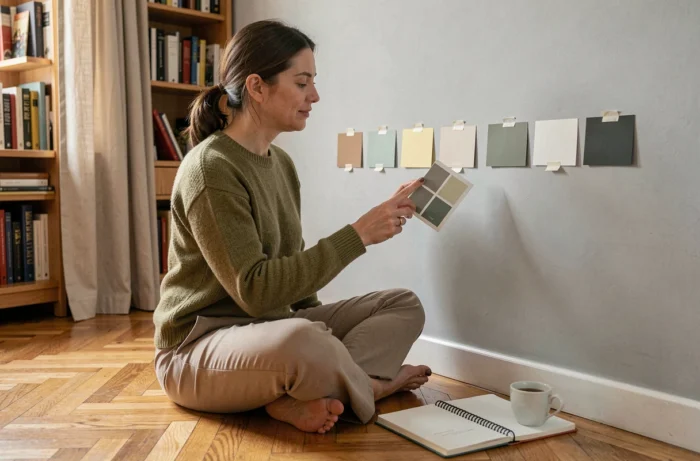
Interior decorating: create a cohesive look without starting from scratch
Completely redecorating a home is expensive and time-consuming. You can achieve a more convincing result by focusing on three key elements: colours, textiles and one or two statement pieces of furniture.
The three-colour rule works well in practice. Choose a dominant colour (walls and floor), a secondary colour (main furniture and curtains) and an accent colour (cushions, accessories and frames). Changing just the accent colour can refresh the feel of a room without repainting or buying new furniture.
Textiles are often underestimated. A rug, linen curtains and a few matching cushion covers are enough to bring together a room where the furniture comes from different eras. The trick is to stick to the same texture or colour theme rather than matching every item individually.
Routine maintenance: simple steps to extend the life of your home’s interior
Maintenance is about more than weekly cleaning. A few seasonal checks can prevent gradual, costly damage.
- Check the bathroom and kitchen seals once a year. Blackened or peeling silicone sealant lets moisture seep behind the tiles, encouraging mould and causing them to come loose.
- Bleed water radiators before each heating season. Trapped air in the system reduces efficiency and causes gurgling noises.
- Inspect the fixings on wall-mounted furniture (shelves and kitchen wall cabinets). Plasterboard wall plugs can loosen over time, especially if the load was underestimated when they were installed.
- Dust the grille at the back of the fridge at least once a year to maintain its energy efficiency.
These tasks take very little time. They help preserve both the look and the energy efficiency of your home, a factor that is increasingly scrutinised when selling or renting out a property.
Furnishing, decorating and maintaining your home are all part of the same cycle. A beautiful home with poor ventilation will deteriorate, while a healthy home with a poor layout will remain uncomfortable. The most worthwhile improvements tend to be technical details (ventilation, lighting and fixings) rather than impulsive decorative purchases.