
We all lose hair every day—it’s a normal part of the hair growth cycle. The problem starts when hair density decreases for no apparent reason, your brush fills up faster, or your scalp becomes visible in places.
Before trying a range of treatments or supplements, it’s worth asking one question: could a magnesium deficiency be contributing to the problem? Many claims have been made about the link between magnesium and hair loss, but the reality is more nuanced than it might seem.
Magnesium and hair follicles: what biology can tell us
Magnesium is involved in more than 300 enzymatic reactions in the body. It plays a role in protein synthesis, energy metabolism, and the regulation of oxidative stress. Hair, meanwhile, is made primarily of keratin, a protein. Biochemical reasoning suggests that a prolonged magnesium deficiency could slow the production of this protein in the follicle.
That said, magnesium is not an established cause of alopecia. Current research has not shown that magnesium supplementation alone is enough to slow or reverse hair loss. One study on telogen effluvium observed improvement with a formula combining several nutrients, including magnesium, but the specific contribution of this mineral could not be determined.
When you look into magnesium deficiency and hair loss, it quickly becomes clear that magnesium works alongside other nutrients rather than on its own. It’s one link in a chain, not a miracle solution by itself.
Identify the real cause before taking supplements
Many people buy magnesium supplements “just in case,” without consulting a doctor or getting tested. The American Academy of Dermatology recommends a structured approach: examining the scalp and hair, targeted blood tests, and sometimes a scalp biopsy, depending on the clinical signs.
Taking supplements without a confirmed deficiency can be counterproductive. Magnesium supplements in particular can cause digestive problems and interact with certain medications. Magnesium from food does not pose this kind of risk.
Hair loss has many possible causes: hormonal imbalances, iron or zinc deficiency, thyroid dysfunction, chronic stress, or telogen effluvium after childbirth or surgery. A magnesium supplement won’t correct low ferritin or a thyroid disorder.
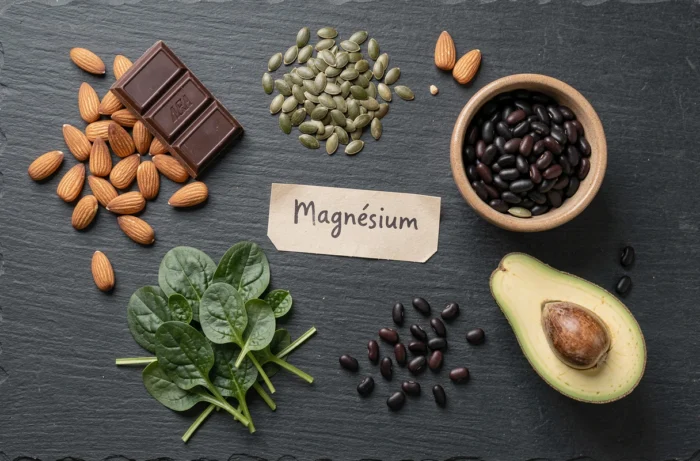
Magnesium-rich foods: key sources for scalp health
Rather than going straight to supplements, you can start by taking another look at your diet. The foods highest in magnesium also provide other nutrients that support hair health.
- Nuts (almonds, cashews, and hazelnuts) provide magnesium, zinc, and fatty acids that help nourish hair follicles.
- Legumes (lentils, chickpeas, and dried beans) combine magnesium, plant-based protein, and iron—three nutrients involved in hair growth.
- Dark chocolate with a high cocoa content is rich in magnesium and antioxidants that help limit oxidative stress on the scalp.
- Leafy green vegetables (spinach, Swiss chard, and kale) provide magnesium along with B vitamins, which act as cofactors in keratin synthesis.
What these foods have in common is that they provide more than just magnesium. It’s this nutritional variety that matters, not an isolated dose of a single mineral. A varied diet meets most nutritional needs without the risk of taking too much.
Magnesium, stress, and hair loss: the often-overlooked connection
Chronic stress is one of the most common triggers of telogen effluvium, a type of diffuse hair loss that occurs a few months after a period of intense stress. Magnesium plays an indirect role here: magnesium deficiency can intensify the body’s stress response, while prolonged stress accelerates magnesium depletion. This can create a self-perpetuating cycle.
Correcting a possible magnesium deficiency won’t “cure” stress, but it may help reduce nervous and muscular tension, improve sleep quality, and lower cortisol production. Over time, these knock-on effects may create conditions that are less conducive to hair loss.
Combine magnesium with practical stress-management habits
Magnesium alone isn’t enough to break this cycle. Better results come from combining adequate dietary intake with stress-management practices: regular physical activity, prioritizing sleep, and cutting back on stimulants such as coffee (which also increases urinary magnesium excretion).
Zinc, B vitamins, and iron: magnesium’s allies for healthy hair
Magnesium doesn’t work alone in hair physiology. Three other nutrients play a direct role in the hair growth cycle and deserve just as much attention.
Zinc supports cell division in the hair follicle and helps stabilize keratin. A confirmed zinc deficiency can cause diffuse hair loss. Oysters, liver, and pumpkin seeds are good dietary sources.
B vitamins, particularly biotin (B8) and folic acid (B9), are involved in the metabolism of the sulfur-containing amino acids that make up keratin. They’re found in eggs, organ meats, and legumes.
Iron, meanwhile, carries oxygen to the hair follicles. Low ferritin is one of the deficiencies most commonly associated with hair loss in women. A blood test can detect it quickly.
How each person responds depends on their nutritional status to begin with, the type of hair loss (hormonal, deficiency-related, or reactive), and how long the deficiency has lasted. The same supplement won’t have the same effect on someone who is low in iron as it will on someone who is low in zinc or magnesium.
Before investing in hair treatments or supplement courses, a targeted nutritional assessment is still the most worthwhile first step. Correcting the right deficiency can produce visible results within a few months. Taking supplements blindly rarely does.