A home’s comfort depends on the way its building envelope, heating systems, ventilation and hot water production work together. Choosing home equipment without understanding these interactions is like treating symptoms without a diagnosis. Thermal performance, indoor air quality and energy consumption all depend on technical decisions made upstream, long before comparing catalogue prices.
Heat loss: the assessment that determines everything else
Before comparing boilers or heat pumps, the first step is to quantify the home’s heat loss. In an uninsulated house, the roof accounts for the largest share, followed by the walls, then the windows and ground floor.
This hierarchy determines the order of work. Insulating the attic before replacing the heating system makes it possible to size the new appliance according to actual needs, rather than choosing an oversized unit to compensate for heat loss. An oversized system costs more to buy, runs in short cycles and wears out prematurely.
Among the equipment featured by Conseils Habitat, insulation and heating solutions are presented in this sequence: improve the building envelope first, then match the appliance’s output to the remaining heating demand.
Thermal bridges (junctions between walls and floors, and around window and door frames) deserve particular attention. Even with effective insulation across the main surfaces, an untreated thermal bridge creates a localized cold spot that can lead to condensation and discomfort. External wall insulation (EWI) addresses these bridges more effectively than internal insulation, but its cost and architectural constraints can make it impractical in some cases.
Programmable thermostats and controls: an underestimated opportunity
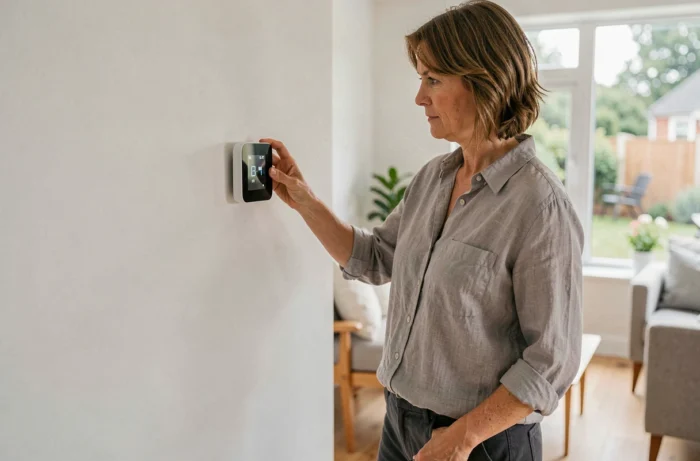
Temperature control with a thermostat is a piece of equipment in its own right, not just an accessory. Each degree above the temperature recommended by ADEME (19 °C in living areas and 17 °C in bedrooms) significantly increases energy consumption.
A programmable thermostat adjusts the temperature to match occupancy schedules. The savings come not only from lowering the temperature at night, but also from switching off the heating when the home is empty during the day—a step often overlooked with manual controls.
Regulatory requirement to keep an eye on
In new buildings, installing a thermostat will become mandatory from January 1, 2027. The deadline for existing homes has been postponed. The thermostat does not need to be connected: basic programming is enough to meet the regulatory requirement.
Being “connected” is therefore not a legal requirement. A wired programmable thermostat provides the same temperature control as a model operated by smartphone, at a lower cost and without relying on a remote server.
Heating and heat pumps: check available incentives before getting a quote
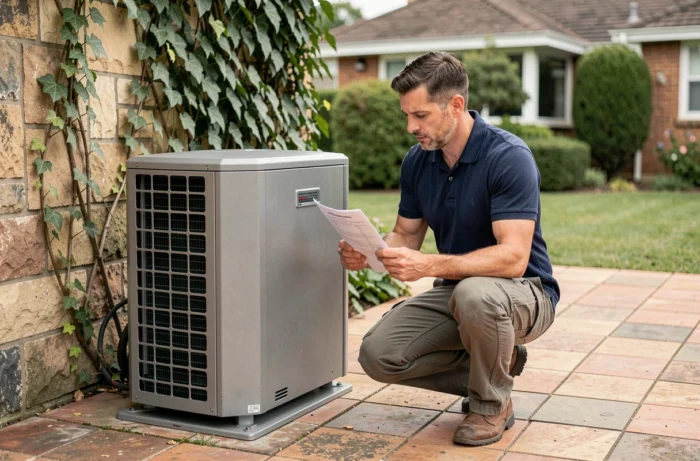
The choice of heating system (air-to-water heat pump, pellet stove or condensing gas boiler) depends on the local climate, the level of insulation achieved and the existing heat distribution system (radiators or underfloor heating).
One often-overlooked factor is that the financial incentive route can determine which equipment you choose. MaPrimeRénov’ and energy savings certificates (CEE) offer different amounts depending on the work carried out and how measures are combined. Checking available incentives before comparing purchase prices can dramatically change the amount you pay out of pocket.
Heat pumps and CEE bonuses: a common pitfall
A heat pump does not automatically qualify for a CEE bonus. Only certain appliance models with specific performance coefficients are eligible. Checking the exact model before signing the quote can prevent you from discovering after installation that you received only the standard grant, which is significantly lower than the bonus you expected.
- Ask the contractor for the product datasheet showing the certified COP (coefficient of performance), not just the value stated by the manufacturer.
- Compare the bonus CEE amount with the standard amount for the same measure: the difference can be several hundred euros.
- Check which incentives can be combined (MaPrimeRénov’ + CEE) and which cannot, depending on the route chosen (a single measure or a whole-home renovation).

Ventilation and air quality: the often-forgotten link
A well-insulated but poorly ventilated home accumulates moisture, indoor pollutants (VOCs from furniture and exhaled CO2) and mold. Mechanical ventilation (MV) is not an optional comfort feature; it is the technical counterpart to airtightness.
A single-flow MV system extracts stale air from humid rooms (the kitchen and bathroom) and lets fresh air in through vents in dry rooms. A heat recovery ventilation system captures heat from the extracted air to preheat incoming air, reducing heat loss from air exchange.
Choosing between single-flow and heat recovery ventilation
- Heat recovery ventilation is worthwhile in a highly airtight home (a new build meeting RT 2012 or RE 2020 standards). In an older building with uncontrolled air leaks, its heat recovery efficiency drops.
- Heat recovery systems require more maintenance: filters need regular replacement and ducts need cleaning. A poorly maintained system can worsen air quality instead of improving it.
- The additional installation cost of a heat recovery system compared with a humidity-controlled single-flow system is justified over the long term only if the building envelope is efficient.
Domestic hot water: match capacity to actual needs
The hot water tank accounts for a significant share of a home’s electricity consumption. A thermodynamic water heater uses a small built-in heat pump to heat water, consuming less electricity than a conventional electric storage water heater with a heating element.
Tank sizing matters just as much as the technology. An oversized tank keeps an unnecessary volume of water hot. An undersized tank requires frequent reheating, cancelling out the energy savings.
For a household of two to three people, a 200-litre thermodynamic water heater will generally meet demand without being oversized. For households of more than four people, a larger capacity is justified, provided it is paired with a timer set to off-peak hours.
Every piece of equipment, from insulation and thermostats to ventilation, works as one link in a chain. A single weak link limits the gains from all the others. Carrying out work in the right order (building envelope, then controls, then energy production) and checking available financial incentives in advance are the two factors that distinguish a cost-effective renovation from a disappointing investment.