
Gaming draws on an increasingly diverse range of technologies, from cloud computing and artificial intelligence to virtual reality. Assessing their real impact on the player experience means looking beyond marketing claims: what tangible benefits do these trends bring in terms of accessibility, immersion and cost, and what new problems do they create?
The environmental cost of gaming: hardware matters more than servers
Debates about the environmental footprint of video games often focus on data centers. Yet a recent report on the subject indicates that environmental impact depends more on hardware than on servers. Manufacturing consoles, graphics cards and screens accounts for the largest share of a player’s carbon footprint.
Cloud gaming, presented as a lighter alternative, is not automatically more sustainable. Its footprint varies depending on the device used by the player, its lifespan and the infrastructure involved. Streaming games on an older smartphone has a different impact from playing on a recent TV connected to a dedicated set-top box.
This finding changes how we view current technology trends. Rapid component replacement cycles (GPUs, VR headsets, haptic controllers) fuel obsolescence, a factor that never appears in product presentations. Several specialist media outlets, including lantredugeek.net, track these hardware developments and their implications for players weighing performance against sustainability.

In-game monetization and player protection: what Europe is planning
Virtual currencies and in-game purchases have become gaming’s dominant business model. In March 2025, the European Consumer Protection Cooperation Network published principles calling for clear information about the real-world price of virtual currencies and stronger protections for minors.
A proposed European legislative measure, the Digital Fairness Act, could go further by regulating monetization mechanics in video games. The proposal has not yet come into force, but it signals a political will to regulate practices that have so far been left to publishers’ self-regulation.
| Proposed measure | Current status | Main target |
|---|---|---|
| Transparency about the real-world price of virtual currencies | Principles published (March 2025) | All players |
| Stronger protections for minors | Principles published (March 2025) | Players under 18 |
| Digital Fairness Act (regulation of monetization mechanics) | Proposal not yet in force | The gaming industry as a whole |
This table summarizes the current regulatory landscape. None of these measures is binding at this stage, leaving players to navigate monetization systems that remain difficult to understand.
Player profiles and geek culture: a more fragmented audience than it seems
The label “gamer” covers a wide range of realities. Manga, genre films, electronic music, cosplay: geek culture works as a network of connected interests, not as a homogeneous bloc.
According to a SELL-Médiamétrie study conducted in summer 2025, a majority of the players surveyed played with others, either online or in the same room, with the share up on the previous year. Video games retain a social dimension that new technologies amplify (built-in voice chat, live streaming, cross-platform play).
This fragmentation has tangible consequences for the industry:
- Marketing campaigns that target “gamers” as a uniform group miss a growing share of their audience, which includes casual players and people whose digital leisure activities span several categories
- Cloud gaming platforms and subscriptions (such as Game Pass) are better suited to these varied habits than a model based on buying individual AAA titles
- In-person events (conventions, local tournaments, LAN parties) remain a community bond that online technologies cannot fully replace
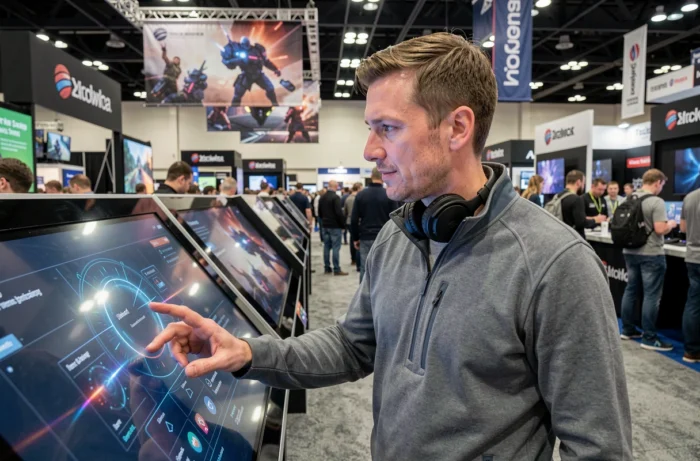
AI and virtual reality: accessibility versus added costs for players
Artificial intelligence is transforming content creation in game studios. Procedural environment generation, adaptive dialogue and less predictable NPC behavior: these applications reduce some production costs. Does that translate into lower prices for players? AAA game prices have not fallen, and “deluxe” or “ultimate” editions offer ever more price tiers.
As for virtual reality, headsets are becoming smoother and more comfortable. The immersive experience is improving, but the entry cost remains high for regular use. A high-performance VR headset, haptic accessories and a suitable physical space represent an investment that most players are not yet willing to make.
Accessibility is not just about price. AI can also generate real-time subtitles, dynamically adjust difficulty or offer alternative controls for players with disabilities. These tangible advances deserve to be distinguished from purely cosmetic claims about immersion.
What the data shows
Gaming technologies are advancing along two paths that do not always converge. Accessibility (cloud gaming, adaptive AI, cross-platform play) broadens the player base. The race for immersion (high-end VR, ray tracing, advanced haptics) concentrates spending on a fraction of the audience.
The environmental impact of hardware and the regulation of in-game purchases remain the two blind spots in the prevailing technology narrative. The European principles published in 2025 establish an initial framework, but are not yet binding. For players, the most defining trend may not be the next graphics breakthrough, but how the industry chooses to distribute the financial and environmental costs of innovation.