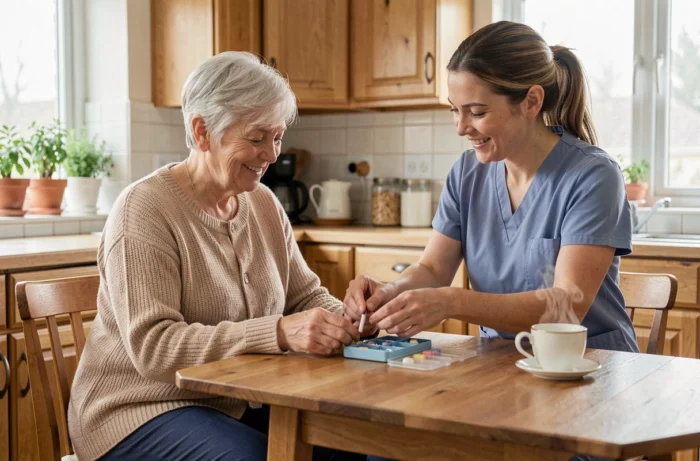
Preparing a meal, going to the doctor, keeping up with household chores: these everyday tasks can become tiring with age. Services for seniors go beyond occasional assistance. Together, they form a coordinated support system that helps preserve independence, safety and social connections—the three pillars of well-being at home.
Coordinating home services for seniors: a new approach
Since January 1, 2024, the framework for home-based autonomy services has required providers to help identify signs of frailty. In practice, a support worker who comes to help with cleaning or bathing can also spot a risk of malnutrition, mobility difficulties or the need for a referral to a healthcare professional.
This changes how support is delivered. Previously, each service operated in isolation: domestic help on one side, nursing care on another, and meal delivery elsewhere. Today, the aim is to connect these services so they provide comprehensive support. A single point of contact can guide you to all the assistance available, saving families from having to navigate multiple processes.
To explore the different options available, Actu Seniors services make it easy to find solutions suited to each situation.
Meal delivery and grocery shopping: supporting good nutrition every day

Have you noticed an older relative sometimes skipping a meal because grocery shopping takes too much energy? This is common, and the consequences are immediate: weight loss, increased fatigue and greater vulnerability to infections.
Home-delivered meals help address this problem. A delivery driver brings a balanced meal each day, often tailored to specific dietary needs (low-salt, modified textures or diabetes-friendly). While this service cannot replace the warmth of sharing a meal, it does ensure a regular intake of nutrients.
Grocery delivery complements meal delivery for seniors who still cook but struggle to carry shopping bags. Several municipalities offer this service through their Centre Communal d’Action Sociale (CCAS). A home care worker can also accompany someone to the market, helping them stay connected with the outside world.
Telecare and fall prevention: making the home safer
Telecare is simple to use: a device or wristband worn at all times lets the user alert a monitoring center if something goes wrong. At the press of a button, they are connected to an operator who assesses the situation and contacts emergency services or a relative.
This service reassures both seniors and their families. But it comes into play after an incident. Fall prevention takes action beforehand and reduces risks at the source.
Adapting the home remains the most effective way to improve safety. These modifications can make a real difference:
- Installing grab bars in the bathroom and toilet to make transfers safer (standing up and sitting down)
- Replacing the bathtub with a walk-in shower with a built-in seat, eliminating the need to step over the tub—a common cause of falls
- Improving lighting in hallways and staircases, with motion sensors for nighttime movement
- Removing unsecured rugs and electrical cords from the floor—two common hazards that are often underestimated
An occupational therapist can assess the home to identify potential hazards. This assessment may be covered under the Allocation Personnalisée d’Autonomie (APA).
Respite care for caregivers: a service that also protects seniors

Family caregivers, often a spouse or adult child, provide a substantial share of day-to-day support. When a caregiver becomes exhausted, the entire balance of care at home can be put at risk.
Respite care benefits not only the caregiver but also helps keep the person receiving care safe. An exhausted caregiver may be less likely to notice warning signs (loss of appetite, confusion or unreported pain).
There are two main types of respite care:
- In-home cover, which provides a few hours of support so the caregiver can take a break for a medical appointment, an outing or simply some rest
- Extended respite care, which provides continuous support for up to 72 hours, depending on regional programs
- Respite centers, which offer free information, emotional support and help with administrative procedures
In Bourgogne-Franche-Comté, more than 18,500 hours of in-home cover and extended respite care were provided in 2025. In Hauts-de-France, 12,000 caregivers benefited from respite centers that same year. These figures show that demand for caregiver support extends well beyond the private family sphere.
Transport and social connections: getting out and about
Losing the ability to drive should not mean losing your social life. Accessible transport services help seniors get to medical appointments, visit friends or take part in community activities.
Some local authorities offer on-demand transport with pickup right outside the building. Others run shuttle services to town centers or markets. Accessible transport helps seniors continue to access healthcare and social activities, both of which are directly linked to well-being.
Friendly visits from volunteers or professionals are another part of this support. Regular visits help combat isolation and also provide an opportunity to check in: visitors may notice a change in behavior, a home that is less well maintained or a new difficulty.
Helping seniors remain at home depends on coordinating these services, not relying on any one of them in isolation. Meal delivery without nutritional follow-up, telecare without home adaptations, transport without a social destination: no single service is enough on its own. It is the combination of services, tailored to each person’s situation, that makes day-to-day life manageable over the long term.