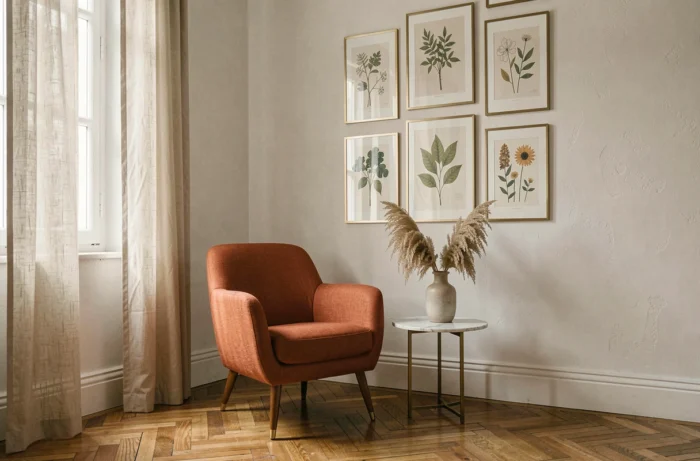
A new sofa delivered to a room that has been closed for three days can saturate the air with volatile organic compounds for several weeks. Transforming your home with style starts with a step most decorating guides overlook: checking what materials release once they’re installed. Personalised decor isn’t just about choosing a style or colour palette; it also affects the quality of the air you breathe at home.
Indoor air quality and decor choices: what’s really at stake
Paints, adhesives, varnishes and some furniture panels emit VOCs (volatile organic compounds). In France, the relevant building and decorating products carry a label that rates their emissions from A+ to C. This label does not cover furniture, leaving a blind spot when furnishing a room.
It’s often assumed that natural materials guarantee low emissions. Solid wood treated with a low-grade varnish can emit as much as particleboard. The most reliable criteria are product information and, above all, thorough ventilation during and after any work.
As for ambience, scented candles and incense contribute to fine particles in indoor air. To create a cosy atmosphere without compromising air quality, explore interior decorating at Ego Déco and opt for dimmable lighting, heavy textiles or flameless diffusers.
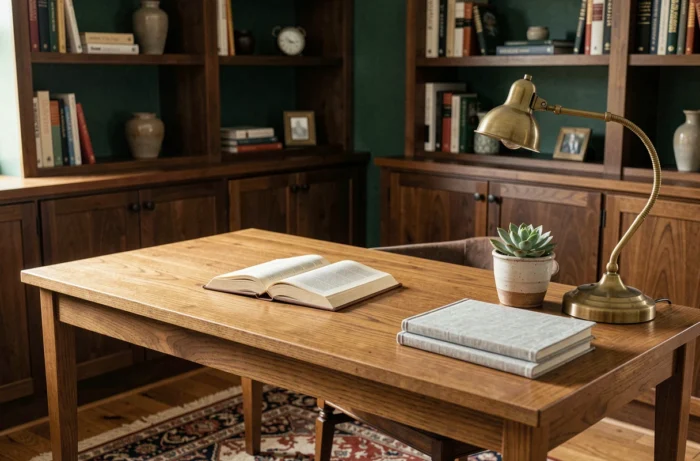
Personalised decor with second-hand furniture
A piece of furniture found at a flea market or on a resale platform comes with a story, a patina and sometimes a shape you won’t find in any current catalogue. It’s often a more effective way to personalise a space than buying mass-produced furniture.
ADEME regularly publishes reports on reuse in France, confirming that this approach is more than just a passing trend. Choosing second-hand means personalising your home without buying lots of new items and extending the life of objects that have already been made.
What to look for first
- Seating (armchairs, chairs, benches): having a chair reupholstered costs less than buying a new designer armchair and gives you a bespoke result
- Solid wood storage furniture (sideboards, chests of drawers, bookcases): it can be sanded, stained or fitted with new handles without losing its strength
- Vintage lighting: a brass or opaline glass lampshade adds character that’s hard to replicate in modern production
The key consideration is repairability. For furniture, the seller must inform consumers about the availability of spare parts when this information has been provided by the manufacturer or importer. Checking repairability before you buy helps you avoid ending up with a piece that’s impossible to maintain.
Colours and materials: create a cohesive look, room by room
You don’t decorate a living room the same way as a bedroom, yet most homes are treated uniformly. The same palette everywhere, the same types of textiles, the same lighting intensity. The result looks “neat” but never truly personal.
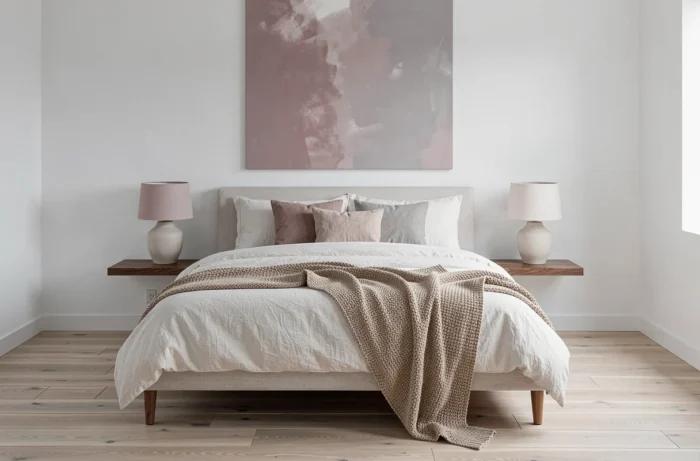
The most straightforward approach is to start with how each room is actually used. A living room where you often entertain benefits from warm shades on one wall (terracotta, ochre, sage green) and flexible seating. A bedroom designed for rest works better with muted tones, absorbent materials such as heavy linen, and indirect lighting.
Pairing materials without overdoing it
Two or three materials are enough for each room. The classic pitfall is combining wood, metal, rattan, velvet and ceramics in the same fifteen-square-metre space. Limiting each room to three materials creates a more elegant effect than piling on textures.
Here’s a practical example: a living room with a linen sofa, a walnut coffee table and a black metal light fixture makes for a well-balanced trio. You can then add a woven rug, cushions in similar shades or a second-hand decorative object without disrupting the balance.
Gallery walls and personal objects: decorate with what you already have
Before buying yet another decorative frame, take stock of what you own. Postcards, framed children’s drawings, large-format travel photos, book covers under glass: these pieces tell a story no shop can sell.
A gallery wall works when it follows one simple rule: a visual thread that ties everything together. This could be the same frame size throughout, a limited colour palette or alignment along a central horizontal line.
- Arrange the frames on the floor before drilling to test the layout
- Keep the spacing even (a hand’s width between each frame creates an airy look)
- Mix different sizes as long as you keep one element consistent (frame colour, mat style or image theme)
A gallery wall made up of personal objects gives a room a stronger sense of identity than a set of posters bought in a bundle. Here, elegance comes from cohesion, not price.
Avoid purely decorative objects
A vase you never use, a sculpture that means nothing to you, a tray placed on a shelf “just to look nice”: these objects eventually create visual clutter. Every item in a room should either serve a purpose or tell a story. If it does neither, it takes up space rather than adding to the decor.
Elegant, personalised decor ultimately calls for restraint as much as for adding things. Removing an object that adds nothing often does more good than buying something new. Decorating better with less remains the most reliable principle for a home that stands the test of time.