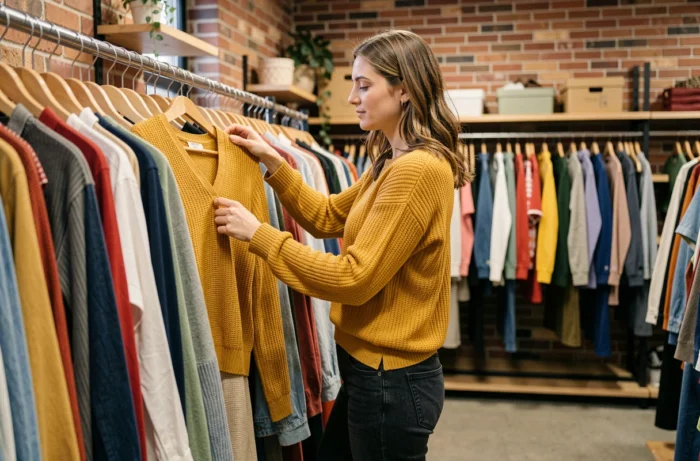
A scratchy T-shirt, trousers that are too tight or shoes that hurt your feet: trendy clothes like these often end up at the back of the closet after just two outings. Choosing pieces that are stylish, comfortable to wear and compatible with a limited budget takes a little strategy. You don’t need to spend more, just spend differently by assessing every purchase from three angles: style, real-world comfort and cost per wear.
Cost per wear: the calculation that changes how you shop for clothes
Have you ever bought a cheap dress, worn it once and then forgotten about it? The problem isn’t your budget, but your shopping criteria. Instead of focusing on the price tag in the store, divide the price by the number of times you realistically expect to wear the item.
Trousers costing 60 euros and worn twice a week for two years work out at just a few cents per wear. A trendy top costing 15 euros and worn three times comes to 5 euros per wear. The cheapest garment is the one you wear the most.
This way of thinking encourages you to choose flattering cuts and fabrics that feel good day to day. An uncomfortable garment, however trendy, will soon be left unworn. To explore trends that live up to this promise, fashion at Le Comparatif offers selections ranked by value for money, helping you spot pieces worth investing in.
Before every purchase, ask yourself two questions: How many outfits in my wardrobe will this piece go with? And will I still enjoy wearing it a month from now? If the answer isn’t clear, move on.

Fabrics and comfort: test a garment beyond the fitting room
Competitors talk a lot about cuts and colours. They rarely address how comfortable clothes are to wear—something you only discover after a full day or several washes.
What to do in the fitting room
Trying on a garment isn’t enough. Raise your arms, sit down and walk a few steps. A blazer that pulls at the shoulders when you’re driving or jeans that dig into your stomach when you sit won’t get much wear, whatever the style.
Check that you can move freely before looking in the mirror. A fabric containing a small amount of elastane blended with cotton often offers a good balance of structure and stretch.
What the fabric label tells you
Fabric determines a garment’s durability and thermal comfort. Here are a few practical pointers:
- Thick cotton (look for a fabric that feels sufficiently dense) holds its shape after many washes, unlike very thin cotton, which quickly loses its shape.
- Linen naturally creases, but it regulates heat well in summer. Accepting the creases is part of choosing this fabric.
- Synthetic blends with a high proportion of polyester dry quickly, but retain odours and can feel unpleasantly warm.
- Viscose and lyocell drape fluidly and feel soft to the touch, making them suitable for smart pieces worn every day.
Fabric composition is a better guide to long-term comfort than the price tag. A moderately priced garment in a good fabric will outperform an expensive piece made from poor-quality material.
Fashion on a budget and second-hand shopping: compare your options before you buy
Buying second-hand has become a go-to way to cut clothing costs. The figures bear this out: tens of thousands of tonnes of second-hand textiles are sold in France every year.
What gets less attention is that prices vary widely depending on where you buy. The same wool jacket may cost half as much at a charity thrift store as on a specialist online platform, where curation and logistics push up the price. Physical consignment stores generally fall somewhere in between.
Comparing sales channels deserves just as much attention as comparing the items themselves. Thrift stores take time to browse, but prices stay low. On peer-to-peer resale apps, you can often negotiate. Specialist vintage or premium sites charge for their selection and authentication services.

The repair bonus: an underused option
Before buying new or second-hand, check whether a garment you already own can be repaired. In France, the repair bonus offered by Refashion provides a discount at approved repair shops for certain repairs, including broken zips, undone seams and lining replacements.
Please note that alterations to adjust the size are not covered by this scheme. Check whether the repair is eligible before counting on the discount. Repairing a well-cut garment you already love is often more cost-effective than buying a new equivalent.
Fashion trends: which ones to embrace and which to ignore
Following every trend is expensive and clutters your wardrobe. The most effective strategy is to distinguish lasting trends from passing fads.
Lasting trends stick around for several seasons. You can spot them when they appear at both high-end brands and affordable retailers. Relaxed fits and neutral shades, for example, have remained popular for several years and are easy to work into an existing wardrobe.
A trend that doesn’t go with what you already own will cost twice as much, because you’ll need to buy complementary pieces to put together a complete outfit. Choose trends that work with your wardrobe staples.
Very short-lived trends (bright colours worn for just one season, extreme cuts) can be incorporated through inexpensive accessories: a scarf, a belt or a pair of earrings. This keeps your budget under control and stops your wardrobe filling up with pieces you can’t wear the following season.
- Build your wardrobe around durable staples made from long-lasting fabrics.
- Add lasting trends gradually, checking that they work with what you already own.
- Try micro-trends only through accessories or inexpensive second-hand pieces.
The legal framework around ultra-fast fashion is also evolving: French lawmakers have agreed on a bill aimed at regulating this business model. The bill still needs to go through the final votes, but the direction is clear. Buying fewer disposable items is no longer just a personal choice—it’s becoming a regulatory trend.
Building a stylish, comfortable wardrobe without overspending comes down to applying three filters to every purchase: cost per wear, comfort tested in real life and compatibility with the pieces already in your wardrobe. These criteria work whatever the shopping channel—new or second-hand—and whatever your budget.