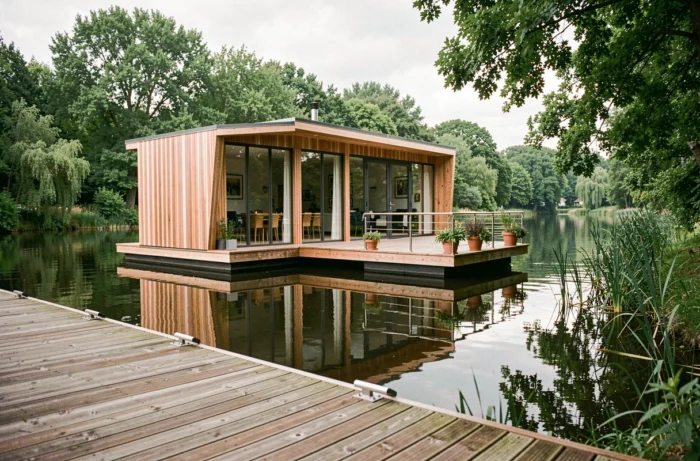
When booking a night on the water for the first time, one question always comes up: how much does it move? Does the floor sway when a barge passes? Does the sound of the water make it hard to sleep? These practical concerns shape the whole experience, long before the décor or natural setting comes into play.
A floating house offers a stay moored on a body of water (lake, canal, pond), with comfort comparable to a traditional holiday cottage. The key factor is location: the quality of the site determines both how peaceful it is and how stable the structure feels.
Permits and regulations for floating houses in France
Before you even start thinking about the décor or panoramic terrace, you come up against a legal framework that most travel articles overlook. Installing a floating house on public waterways requires an occupancy permit. The French General Code on Public Property governs this use, and the rules vary depending on the installation’s status and where it is moored.
The Mobility Orientation Law of December 24, 2019, included clarifying the rules for floating establishments among its objectives, particularly regarding safety, the environment and use of public property. For a tourism operator, this means the site has completed specific administrative steps before offering stays.
In practice, when choosing a unique floating house on the water, it’s worth checking that the host has this permit. Operators who comply with the regulations generally display information about their occupancy permit, which also helps ensure that the onboard safety equipment meets requirements.
Floating house or amphibious home: two different ways of living with water
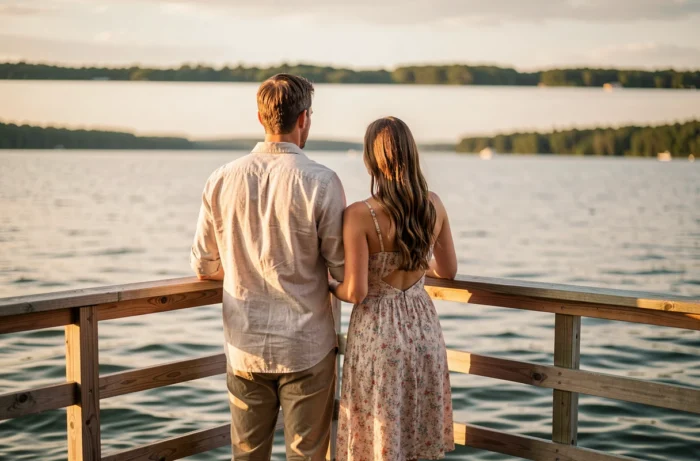
The two terms are often confused, but the distinction has a direct impact on your stay. A floating house rests on the water at all times, held in place by an anchoring system and floats. It moves slightly with the wind and current; this subtle motion is what makes a stay appealing to some and off-putting to others.
An amphibious home works differently: it normally stays on the ground and rises only when the water level increases, thanks to a flotation and guidance system. This type of construction addresses the risk of flooding, rather than offering an experience on the water.
For an unusual getaway, a floating house is what gives you that sense of immersion. The floor barely moves on a calm lake, but sways more on a busy canal. The choice of body of water directly determines how much movement you’ll feel.
How the location makes a difference
- An inland lake with no motorized boating offers near-total stability, ideal for family stays with young children
- A navigable canal (such as the Nantes to Brest Canal or the Canal du Midi) creates a gentle rocking motion when boats pass—noticeable, but rarely disruptive at night
- A private pond combines complete peace and quiet with close contact with nature, though access can be more remote, so it’s worth planning your shopping in advance
What a floating cottage is really like: what to expect onboard
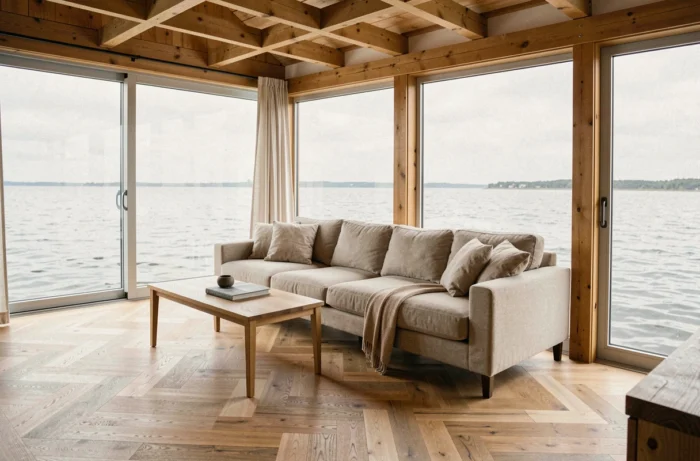
The image of a rustic cabin floating on a pond no longer reflects the range of accommodation available in France today. Most floating stays offer a level of comfort comparable to a three-star holiday cottage.
They generally include a fully equipped kitchen, a shower room, heating for off-season stays and a terrace overlooking the water. The terrace is what makes all the difference: sipping coffee just above the water in the morning and watching waterbirds with no one else in sight are highlights that no other type of unusual accommodation can match.
Sound insulation varies considerably from one property to another. Newer structures, often built on high-density polyethylene floats, do a better job of muffling the sound of lapping water than older models with metal hulls. If you’re sensitive to noise, it’s worth checking this before booking.
What to check before booking
- Connection to the power grid or solar power: this determines whether you can charge your devices and use energy-hungry appliances
- Drinking water supply (mains connection or tank) and type of toilet (standard or composting), both of which affect perceived comfort
- Access to the dock: some locations require crossing a narrow gangway, something to consider if you have bulky luggage or a stroller
- A life jacket for every guest, which is mandatory and a sign of a responsible operator
Waterfront locations in France: what makes a site spectacular
A great location is about more than a beautiful view. Water quality, exposure to the wind and ambient noise matter just as much as the scenery.
Sites bordering a protected natural area (such as a marsh or bird sanctuary) offer wildlife you can observe from the terrace. You might spot herons, kingfishers and sometimes otters at dusk. For most travelers who share their experiences after a stay, this close contact with wildlife is the most memorable part.
It’s also worth considering exposure to prevailing winds. A floating cottage facing into the prevailing winds will feel cooler in summer but less comfortable in the shoulder seasons. The best locations are often tucked into a sheltered cove or bend in the river.
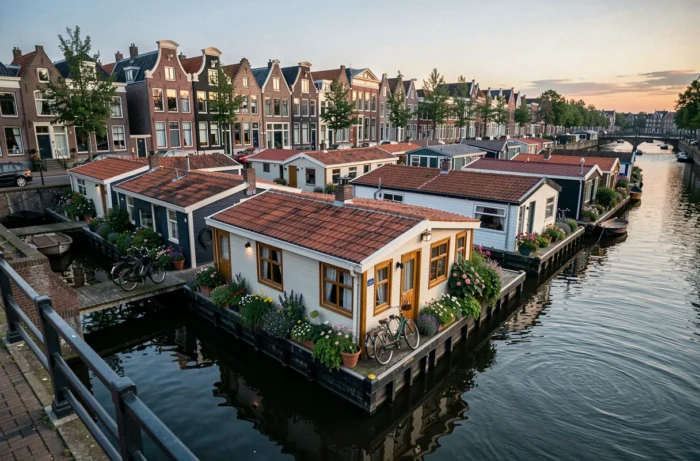
The depth of the water is a factor that’s often overlooked. Shallow lakes warm up quickly in summer and encourage algae growth, which can affect the enjoyment of your stay. Responsible operators share information about the water quality at their site.
A successful floating house stay starts with choosing the right site, far more than with the size or décor of the accommodation. The location determines stability, quiet, wildlife and natural light. It’s the one factor you can’t change once you arrive.