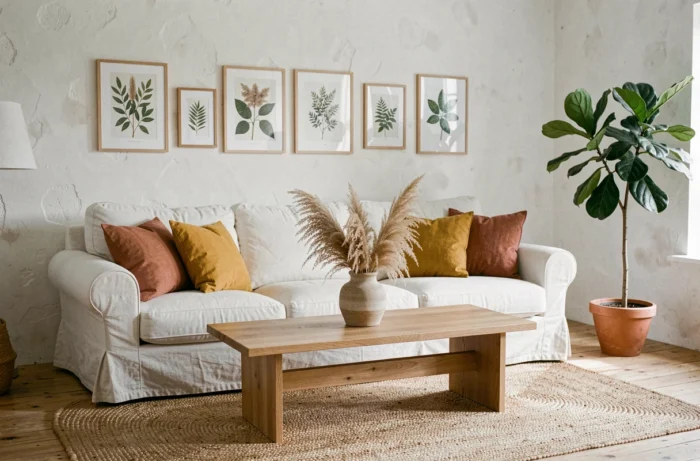
A new sofa installed in a closed living room can emit formaldehyde for several weeks. Before choosing a wall color or furniture style, it’s worth asking a question rarely addressed in decorating guides: will this choice affect the quality of the air we breathe every day? Creating an interior that reflects who you are also means choosing materials and objects suited to healthy, repairable and sustainable everyday use.
Emissions labels and decorating choices: what paint and flooring can hide
In France, many construction and decorating products intended for indoor use carry an emissions label for pollutants ranging from A+ to C. This classification covers paints, adhesives, varnishes and certain types of flooring. In practical terms, when choosing a colored wall coating or laminate flooring, this rating provides an objective criterion beyond appearance.
The catch is assuming that the label covers everything. Furniture is not included in this labeling scheme, even though a piece made from particleboard can also release volatile compounds. You could end up with a perfectly rated A+ wall and a chest of drawers that emits substances for months.
The solution is simple: after installing a new piece of furniture, air out the room at least twice a day for the first few weeks. And when choosing between two products, favor the one whose manufacturer provides details about the materials used. A complete lack of information about a piece of furniture’s composition is rarely a good sign.
To explore these topics further and find practical ideas for every room, browse home inspiration from Oka Mag for a mix of decorating ideas and practical advice on materials.
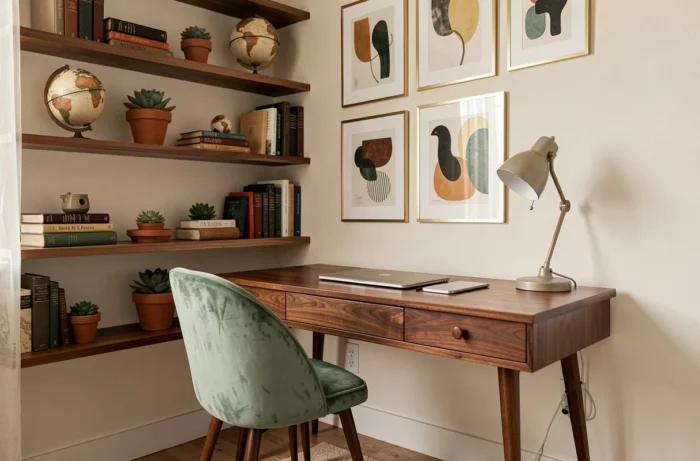
Living room and bedroom decorating ideas: add personality without accumulating clutter
We know the impulse: to give a living room character, we pile on the cushions, framed pictures and scented candles. The result is often a cluttered interior that’s hard to maintain, with some of it ending up at the back of a closet in less than a year.
A more effective approach is to work with reversible layers. Keep the walls neutral (A+-rated paint in a subtle shade) and focus your personality on easy-to-change elements: a woven rug, a linen cushion cover or a pendant light. Every new item should answer two questions: can I repair it if it gets damaged, and could someone else use it if I get tired of it?
What about candles and incense?
Burning candles or incense contributes to fine-particle pollution indoors. For a cozy atmosphere, dimmable lamps or electric candle holders can create a similar effect. The decorative effect doesn’t always justify the impact on indoor air quality, especially in small, poorly ventilated rooms.
Secondhand decorative accessories
Vases, mirrors, picture frames and small occasional tables are easy to find at flea markets or on resale platforms. They add a distinctive touch that’s impossible to replicate with standardized new products. A vintage 1960s armchair, for example, gives a living room far more character than a mass-produced set of decorations.
Here’s the distinction to keep in mind:
- Secondhand accessories and small pieces of furniture are easy to incorporate, with no particular technical constraints
- Reclaimed materials used in a renovation (beams, old tiles, reclaimed flooring) can raise questions about traceability, technical specifications and insurance
- A secondhand solid wood piece of furniture will almost always be easier to repair than a new piece made from particleboard covered in melamine
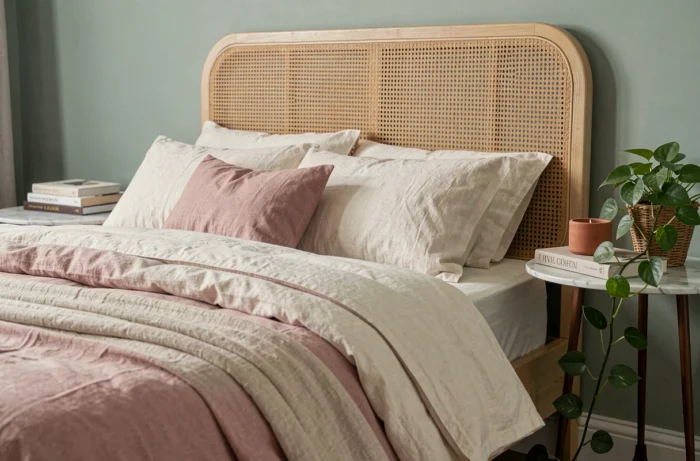
Furniture repairability: a key to sustainable decorating
We hear a lot about sustainable design, but what actually makes a piece of furniture last? It’s not just the quality of the material; it’s also whether the item can be repaired. A chair leg that can be screwed back on is better than one that’s glued in place, even if the glued model costs less upfront.
When choosing a table, shelving unit or sideboard, check a few practical details:
- Are the joints mechanical (screws or accessible dowels) or permanent (glue or hidden staples)?
- Does the manufacturer offer spare parts or a repair service?
- Can the main material (solid wood, metal or glass) be easily restored, or would a chip make the whole piece impossible to salvage?
- At the end of its life, can the materials be separated for recycling or reuse?
These criteria aren’t limited to high-end furniture. Some affordable retailers are starting to provide information about how repairable their products are. Choosing repairable furniture also means choosing furniture that will keep its style for longer, because you can sand it, repaint it or reupholster it instead of replacing it.
Interior decorating project: create a consistent look, room by room
A cohesive interior doesn’t rely on applying the same theme everywhere. It comes together through a common thread: a palette of two or three colors, a dominant material (light wood, black metal or terracotta) and a consistent approach to light.
Start with the room where you spend the most time, often the living room or kitchen. Try out color and texture combinations there before carrying them through to the other rooms. Working room by room helps prevent impulse purchases and lets you make adjustments as you go.
Consistency between rooms also comes down to the finishing touches: door handles, baseboards and light switches. These details go unnoticed when they match, but can make a space feel disjointed when every room has its own hardware style.
A decorating project that stands the test of time combines walls and floors chosen for their low pollutant emissions, repairable furniture and personal accessories that are easy to rotate. The result reflects the people who live there, not a catalog page. The difference is also in what you don’t see: cleaner indoor air and objects that don’t end up at the dump after just a couple of seasons.