Choosing flowers for a garden that blooms all year round is about more than simply stacking varieties season by season. The real selection criteria are how each plant’s flowering cycle matches your soil type and the watering constraints of your garden. Annuals, perennials and biennials each fill a specific place in the calendar, but their tolerance for drought and shade varies considerably.
Seasonal flowering: a comparison of annuals, perennials and biennials
The table below compares the three main categories of garden flowers by flowering period, lifespan and drought tolerance.
| Category | Main flowering period | Lifespan | Drought tolerance | Care |
|---|---|---|---|---|
| Annuals (petunias, zinnias, cosmos) | Spring to autumn | One season | Low to moderate | Regular watering, replace each year |
| Perennials (lavender, coneflower, hardy geranium) | Varies by species, covering all four seasons | Several years | Moderate to high | Annual pruning, divide every 3–4 years |
| Biennials (pansies, foxgloves, hollyhocks) | Spring of the second year | Two years | Moderate | Sow in advance, then require little attention |
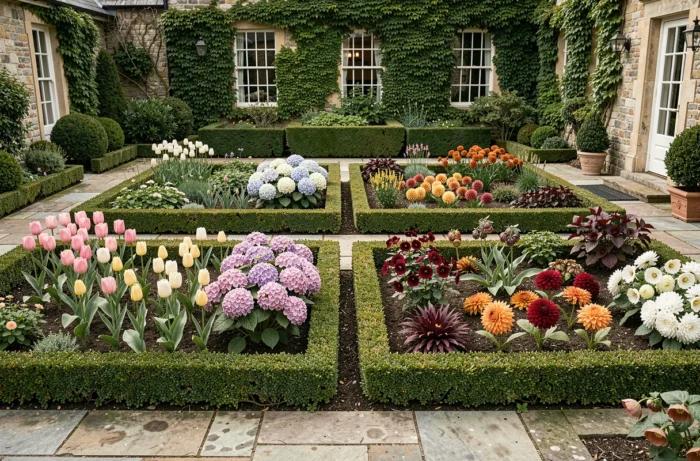
Perennials form the backbone of a garden that blooms all year round: they return without replanting, and some, such as lavender and sedum, thrive in dry, poor soil. Annuals provide vivid colour for one season but need more water. Combining the two categories helps fill gaps in flowering, provided you choose species whose peak flowering periods do not overlap.
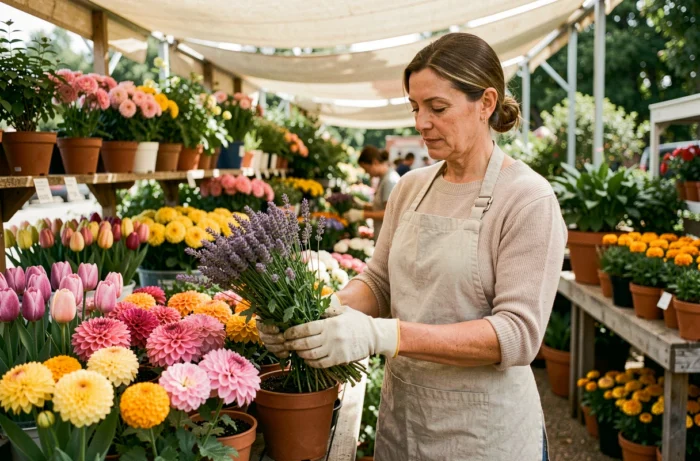
The flowers in the Jamet Espaces Verts catalogue are a good example of how perennials and annuals suited to different soil types can complement one another.
Drought-resistant flowers that benefit pollinators
Drought spells can significantly change the composition of a flower bed. In some French departments, prefectural orders prohibit watering plants (including private gardens) during specified hours once the heightened alert level is reached. In Isère, for example, this type of restriction has already been enforced. Check your local council’s watering guidelines before planning a flower bed to avoid planting water-hungry species you will not be able to maintain.
These regulations make it important to favour water-wise plants, which also happen to be among the most beneficial to pollinators.
- Lavender, thyme and oregano thrive in full sun and well-drained soil. Once established, they need no watering and provide nectar in midsummer, when bees’ food sources are scarce.
- Purple coneflower and rudbeckia bloom from July to October, filling the late-summer gap when few other plants are in flower.
- Sedum spectabile, with its late flowering period (September–October), attracts butterflies and bees when few plants are still in bloom.
- Hellebores (Christmas roses) take over in winter, providing pollen for the first bumblebees as early as January.
Choosing single flowers over double-flowered varieties makes a real difference for pollinators. Double flowers, bred for their abundance of petals, often produce less accessible pollen. Plants grown from local seed, identifiable by the French Office for Biodiversity’s “Végétal local” label, are better suited to the climate in their region.
Continuous flowering and food sources for insects
A garden that blooms abundantly in spring but is bare by late summer creates a “food gap” for pollinators. The aim is to keep at least a few species in flower throughout the year, including in autumn and at the end of winter.
Leaving an area unmown, with dry stems in place, provides shelter and resources for insects, even when no cultivated plants are flowering. This cost-free approach is an effective complement to a planned flower bed.
Sun exposure and soil: the two factors that determine your choice of flowers
Before thinking about colours or seasons, two practical factors guide your selection: sun exposure and soil type.
A flower bed in full sun (more than six hours of direct sunlight) can accommodate most Mediterranean perennials, including gaura, shrubby sage and yarrow. These plants tolerate heat and stony soil.
By contrast, a bed in partial or full shade calls for species such as hostas, astilbes and ferns, which do not tolerate direct sunlight well but thrive in cool, humus-rich soil.
Choose plants to suit the pH and drainage
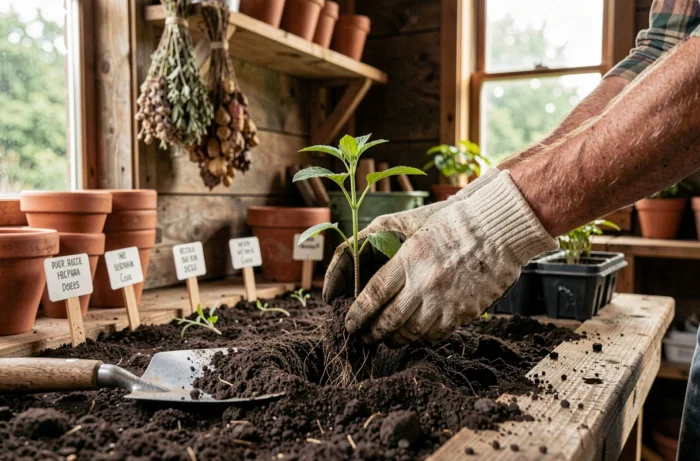
Clay soil retains water and suffocates the roots of many Mediterranean plants. Testing drainage before planting (dig a hole thirty centimetres deep, fill it with water and see how long it takes to drain) can help prevent losses. If water remains for several hours, choose species suited to wet conditions or improve the soil with coarse sand.
Roses, often associated with traditional gardens, need deep, rich, well-drained soil. In chalky soil, varieties grafted onto Rosa canina adapt better than those grafted onto Rosa multiflora.
Planning flower beds for continuous blooms
Spreading flowering periods across all twelve months takes careful planning. Here is a sequence that works in a temperate climate:
- Winter (December–February): hellebores, snowdrops and winter jasmine. These species tolerate frost and flower without intervention.
- Spring (March–May): tulips and daffodils (bulbs planted in autumn), followed by early perennials such as hardy geraniums and irises.
- Summer (June–August): lavender, coneflower and agapanthus in well-drained soil, with cosmos and zinnias (annuals) for bright colour.
- Autumn (September–November): asters, sedum spectabile and Japanese anemones. Ornamental grasses (miscanthus, stipa) add volume without extending the flowering season.
Planting at least three species for each season ensures something else is ready to take over if one is affected by unusual weather. This redundancy is the most reliable way to keep a garden blooming without a quiet spell.
Perennials and biennials are best planted in autumn: the still-warm soil encourages root growth before winter, helping plants get off to a stronger start the following spring. Annuals, meanwhile, are sown or transplanted after the last frosts, generally from mid-April onwards, depending on the region.
A garden that blooms all year round depends less on the number of varieties than on how well they complement one another in terms of soil, sun exposure and water requirements. As watering restrictions become more frequent, drought-tolerant perennials and simple-flowered plants of local origin are a better choice than water-hungry arrangements. Choosing flowers suited to your garden rather than to a catalogue is the best long-term investment.