Interior renovation encompasses very different interventions depending on their nature: redoing partitions, replacing electrical or plumbing networks, thermal insulation, installing coverings, choosing furniture. Each task influences the others, and the order in which these works are carried out determines both the final result and the actual budget spent. Approaching a renovation and interior decoration project without prioritizing these dependencies exposes one to costly reworks.
Air quality on the construction site: a parameter often overlooked in interior renovation
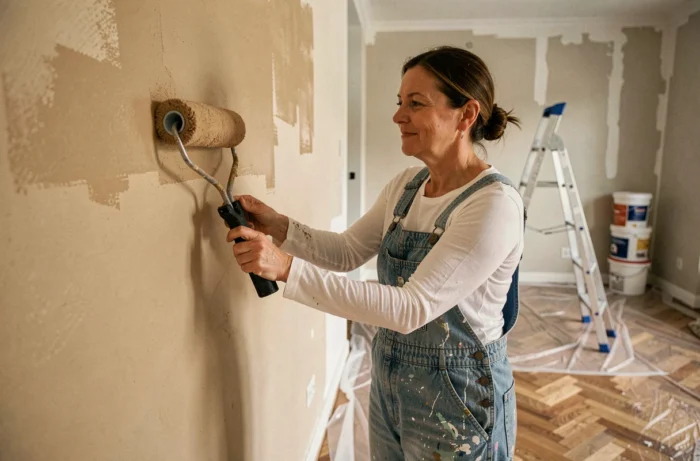
Before even discussing planning or budget, a technical aspect deserves to be addressed: the air quality during the work. Sanding walls, removing old coverings, applying paints or adhesives release dust and volatile compounds that remain trapped in the home if nothing is planned.
MaisonSûr recommends ventilating the rooms throughout the duration of the work and checking the emission label of the materials used. This label, rated from A+ to C, appears on paint cans, undercoats, and most floor coverings.
In practical terms, a construction plan that incorporates ventilation changes the way the work is sequenced. Painting a closed room in winter, without air extraction, and then laying a floating floor on top while the solvents have not finished evaporating seals pollutants in the living space. Planning ventilation between each finishing step slightly extends the schedule but protects the occupants, especially in a home that is inhabited during the work.
To delve deeper into the various stages of a project, consulting the work on Vivez Décorez allows for a better visualization of the sequence of tasks.
Energy renovation aids: what the tightening of MaPrimeRénov’ changes for your project
The energy aspect often weighs heavily in an interior renovation budget, especially when it comes to insulation or heating replacement. The eligibility rules for aids have evolved, and these changes can alter not only the budget but also the choice of works themselves.
Extensive renovation and abandonment of fossil heating
For an extensive renovation in a single-family home, keeping gas or oil heating after the work now excludes one from receiving aid. In other words, the type of energy chosen conditions access to financing. Checking the project’s eligibility before signing the quotes avoids discovering, once the work has started, that the file does not pass.
Isolated works and energy savings certificates
Some works excluded from MaPrimeRénov’ may still fall under energy savings certificates (CEE). The amounts and conditions vary depending on the offer and the scheme. Comparing the two mechanisms before setting the order of interventions provides additional flexibility on the budget.
- Check if the project falls within the scope of MaPrimeRénov’ (gesture pathway or accompanied pathway) before signing any quotes.
- Consult the CEE offers from energy suppliers for uncovered items, particularly attic insulation or the replacement of insulated windows.
- Anticipate the target energy type of the home after the work: this choice locks in access to aids and guides the sizing of the installation.
Sequencing renovation works: the technical order that avoids reworks
Competitors often list a generic order: demolition, structural work, networks, finishes. This sequencing is correct on paper, but the most frequent errors lie in the transitions between two phases.
A common example: installing plasterboard before the electrician has finished running conduits in the partitions. The plasterer then has to return to cut and redo his joints, which generates additional costs and delays. Each trade must validate the completion of its intervention before the next one starts.
Coordination between insulation and interior decoration
Interior insulation reduces the usable area by a few centimeters per treated wall. This setback alters the placement of furniture, the position of outlets, and sometimes even the choice of coverings. Deciding on the decoration of a room without knowing its final insulation thickness is to work on a false plan.
The right reflex: finalize the insulation plan, have the dimensions validated by the plasterer, and only then choose the furniture and colors. This sequence may seem rigid, but it eliminates last-minute adjustments in the kitchen or bathroom.

Interior decoration and material choices: balancing aesthetics and technical constraints
Decoration is not a superficial dressing applied after the “real” work. Finishing materials interact with the substrate, ambient humidity, and the use of the room.
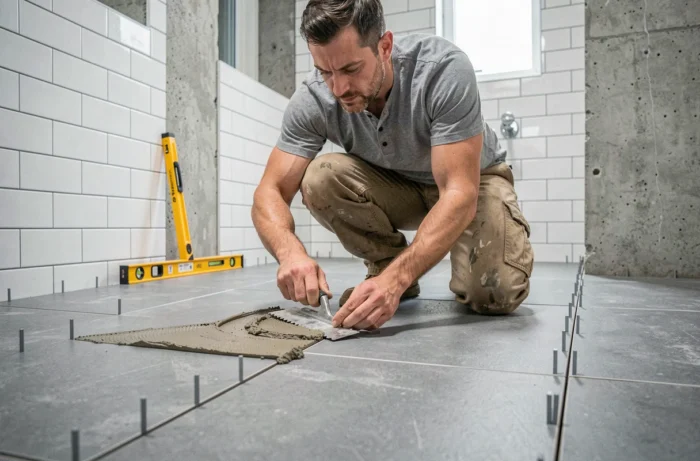
A large-format tile on an old floor that has not been leveled will crack at the joints within a few months. A non-woven wallpaper applied to a poorly prepared wall will bubble. The preparation of the substrate determines the durability of the chosen finish.
Emission label and daily comfort
Beyond the visual aspect, each interior decoration material emits volatile organic compounds at varying levels. Prioritizing products rated A+ for paints, adhesives, and floor coverings is both a technical choice and a comfort choice. This information appears on the packaging and remains the simplest way to decide between two products comparable in price and appearance.
- Check the flatness of the substrate before choosing the format of tiles or flooring: a deviation of a few millimeters requires prior leveling.
- Select paints and adhesives rated A+ for VOC emissions, especially in enclosed spaces like bedrooms.
- Adapt the covering to the actual use of the room: a soft floor in a kitchen does not handle heavy object drops well, and solid wood flooring in a bathroom requires specific treatment.
A successful renovation and decoration project relies less on the accumulation of generic advice than on understanding the dependencies between tasks. The air quality on the construction site, eligibility for aids, the order of interventions, and the compatibility of substrate and finish form a chain. Neglecting one link forces a rework on the next, and this is precisely where budgets spiral out of control.