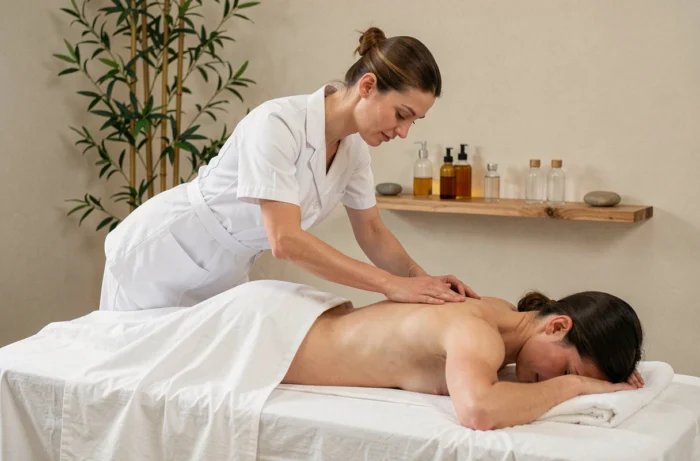
A one-hour massage in a clinic costs between 60 and 90 euros in most French cities. This price varies depending on the technique used, the location of the session, and the practitioner’s positioning. Understanding what lies behind these discrepancies allows you to choose a service that fits your budget without sacrificing quality.
What the displayed price doesn’t tell you about the actual cost of a massage
Have you ever compared two practitioners who charge the same hourly rate but offer very different experiences? That’s normal. The displayed price only reflects part of the service. A one-hour session rarely includes sixty minutes of actual massage.
The welcome time, the discussion about your needs, getting settled on the table, and tidying up the clinic between clients take up a significant portion of the time slot. A practitioner who charges for an hour often provides only forty to fifty minutes of actual hands-on work. This is a point that is rarely explained to clients.
The tax regime also complicates the interpretation of prices. A wellness massage performed by a non-healthcare professional is not automatically exempt from VAT, unlike a procedure performed by a physiotherapist in a medical setting. Therefore, two identical rates can cover very different margins for the practitioner and distinct levels of qualification for the client.
To better understand these discrepancies, you can check the massage prices on Belle et Naturelle, which details the ranges by type of service.

Massage prices by duration: the reference grid
Duration remains the primary pricing criterion. The observed ranges in France provide a reliable benchmark to assess whether a quote is consistent.
- 30-minute session (back, neck, or legs): generally between 35 and 50 euros. This is the most accessible format, suitable for a targeted need.
- One-hour session in a clinic or institute: the most common range is between 60 and 90 euros. This is the standard market format.
- 90-minute session: expect to pay between 90 and 130 euros. This format is suitable for full-body massages that combine several areas.
These ranges correspond to services in a clinic. The price changes as soon as the context shifts, as seen with home or spa massages.
Home, corporate, and spa massage prices: the concrete differences
The location of the session sometimes surprisingly alters the price. Here’s what justifies these differences.
Home massage
A one-hour home massage generally costs between 70 and 100 euros, sometimes plus travel fees. The practitioner transports their table, oils, and linens. They also lose non-billable travel time between appointments. The extra cost for home service covers logistics, not a different massage.
Spa or hotel massage
In a spa, prices often exceed 80 euros and can rise above 150 euros per hour. The environment (changing room, sauna, ambiance) is included in the price. The massage itself is not necessarily more technical than in an independent clinic.
Corporate massage
Seated massage in a corporate setting is generally billed between 60 and 80 euros per hour of presence. The practitioner conducts short sessions of fifteen to twenty minutes on several employees. It is the employer who pays the bill, which changes the pricing logic.
Factors that influence the price of a wellness massage
Beyond duration and location, several elements can shift the pricing. Knowing them helps avoid unpleasant surprises.
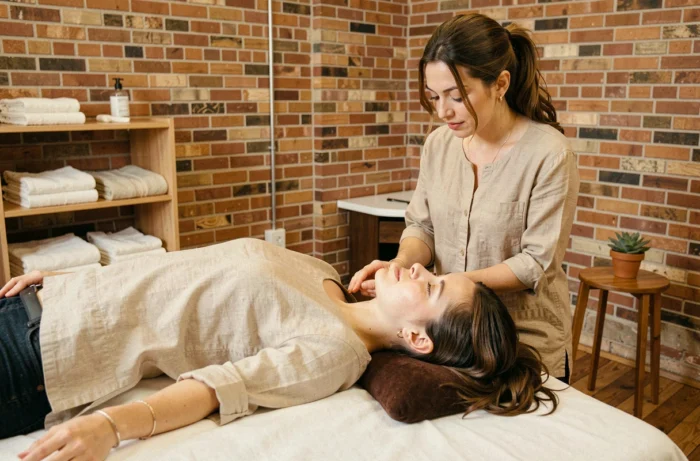
The technique used directly influences the price. A Vodder lymphatic drainage or a Renata França massage, which require specific training, often costs more than a classic Swedish massage. Reflexology and energy treatments (Tui Na, Chi Nei Tsang) also fall into the higher price range.
Geographical location carries significant weight. In rural areas, a one-hour session often negotiates between 50 and 80 euros. In Paris, prices start higher, driven by clinic rents and the cost of living. Tourist areas also display prices above the average.
The experience and reputation of the practitioner justify significant discrepancies. A beginner masseur starting as a sole proprietor may offer introductory rates. An experienced practitioner, with a loyal clientele and recognized certifications, logically charges more.
Packages and subscriptions can reduce the unit cost. Purchasing five sessions in advance is generally cheaper than paying individually. This is a useful lever for those who consult regularly.
Reimbursed massage: what the mutual insurance can cover
A wellness massage is not reimbursed by health insurance. Only physiotherapy procedures prescribed by a doctor are included in the standard care pathway.
However, some mutual insurance companies offer an annual package for alternative medicine or wellness. The amount varies from one contract to another, ranging from a few dozen euros to over a hundred per year. It is useful to check the conditions of your contract before booking, especially the eligible practitioners and the number of covered sessions.
The wellness massage market in France is evolving towards increasingly specialized services. The growing demand for drainage and modeling is driving prices up for certain techniques while maintaining accessible rates for classic relaxation massages.
Comparing practitioners based on the actual duration of the massage, the proposed technique, and the location of the session remains the most reliable way to find the best value for money.