Designing a garden is not just about choosing plants and laying a terrace. Several technical aspects, often overlooked in traditional guides, are crucial for the long-term success of the project. This article reviews the key garden design elements to prioritize, comparing their actual impact on sustainability and maintenance costs.
Local regulations and stormwater management: the forgotten foundation
Before sketching any flower beds or pouring a terrace slab, a check is necessary: the urban planning documents of the municipality. The PLU and stormwater zoning set requirements for permeable surfaces, open ground, and rainwater management. These rules vary from one plot to another.
Creating a concrete path or terrace without consulting these documents may require modifications to the project later, resulting in significant additional costs. The PLU may impose a minimum percentage of open ground on the plot, which directly influences the buildable hard surface area.
Stormwater management also becomes a design lever. A swale or rain garden slows down and infiltrates runoff, provided that the soil and slope of the plot are suitable. An overview of the Ambiance Jardin site allows for quick identification of themes related to these technical and plant arrangements.
Comparison table of garden design elements by priority
The table below ranks the main garden design elements according to their impact on the garden’s sustainability and the frequency of maintenance they generate.
| Element | Impact on sustainability | Recurring maintenance | Subject to PLU |
|---|---|---|---|
| Soil and surfaces (terrace, paths) | High | Low to moderate | Yes |
| Stormwater management | High | Low | Yes |
| Choice of plants and flower beds | High | Moderate to high | Rarely |
| Vegetable garden and edible space | Moderate | High | No |
| Furniture and outdoor lounge | Low | Low | No |
| Outdoor lighting | Moderate | Low | Sometimes |
| Fences, walls, and privacy screens | Moderate | Low | Yes |
The two elements with high impact and low maintenance (soil/surfaces and stormwater) are also those that depend on urban planning rules. Addressing these elements first avoids having to redo the work once the plantings are in place.
Plants and watering restrictions: adapting plantings to the actual climate
The choice of plants remains the most visible aspect of garden design. However, an external factor increasingly weighs on this choice: watering restrictions related to drought.
Prefectural orders modify water use rules during the season. Checking the restrictions applicable to your address on VigiEau before selecting water-intensive species reduces the risk of plant losses during the summer.
Rainwater harvesting does not exempt from this verification. Restrictions may differentiate between water from the network and harvested water, depending on the order in effect in the municipality. Consulting local guidelines before installing a tank allows for proper sizing of the equipment.
Three criteria for plants suited for easy maintenance
- Drought resistance: prioritize species that tolerate several weeks without watering once established, reducing dependence on water inputs between May and September
- Root development: deep-rooted plants stabilize the soil and limit runoff, complementing natural stormwater management
- Blooming calendar throughout the year: pairing plants with staggered blooming periods ensures continuous visual interest without multiplying pruning interventions
Vegetable garden and edible spaces: the high-maintenance element
The vegetable garden is among the most popular elements in a landscaping project, but it also requires the most regular follow-up. The frequency of watering, crop rotations, and soil amendments demand constant attention between spring and autumn.
For an easy-to-maintain garden, limiting the vegetable garden to a few well-defined squares rather than dedicating a large area yields better results. An area of two to three square meters is sufficient to produce herbs and a few seasonal vegetables without turning gardening into a chore.
The soil of the vegetable garden deserves special attention. A thick mulch reduces evaporation and limits weed growth, significantly decreasing the weekly maintenance time.
Terrace, furniture, and living areas: comfort at the right time
Garden furniture and the setup of an outdoor lounge are the most enjoyable aspects to address, but also the least structural. The comfort of the outdoor lounge does not compensate for poor drainage or a poorly oriented terrace.
Several points should be decided early in the project:
- The orientation of the terrace in relation to the sun at the end of the day, which determines whether the space will actually be used in the summer
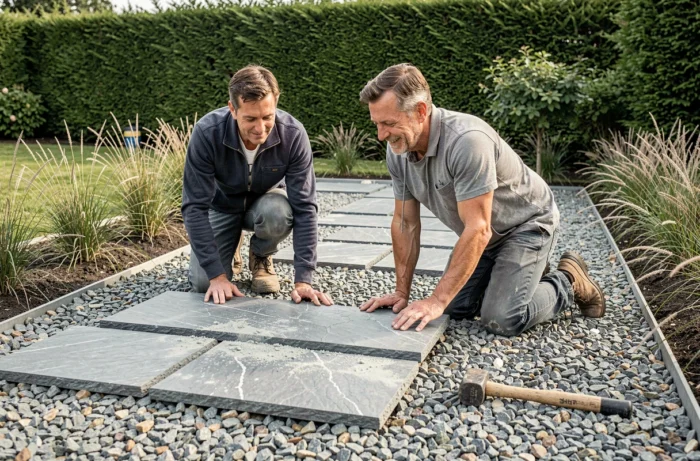
- The material of the surface (wood, stone, composite slabs) and its compatibility with the permeability requirements of the PLU
- The proximity of a water point and an electrical supply for lighting, which conditions the comfort of use without additional work
Living areas should be planned alongside circulation paths. A logical passage between the house, terrace, and back of the garden structures the whole and avoids trampling on the lawn or flower beds.
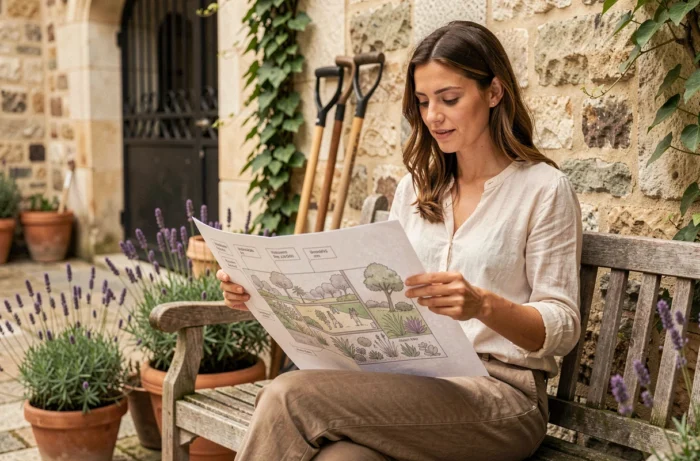
Garden design benefits from being approached in decreasing order of constraints: first urban planning rules and water management, then plants suited to the local climate, and finally furniture and finishes. Addressing regulatory elements upfront protects the entire project from costly revisions. The rest can be adjusted season after season.